Why Ingredients Appear in a Particular Order
Ingredient order shows which ingredients make up more of a packaged food, but it cannot tell you the whole recipe, nutrition profile, or product quality.
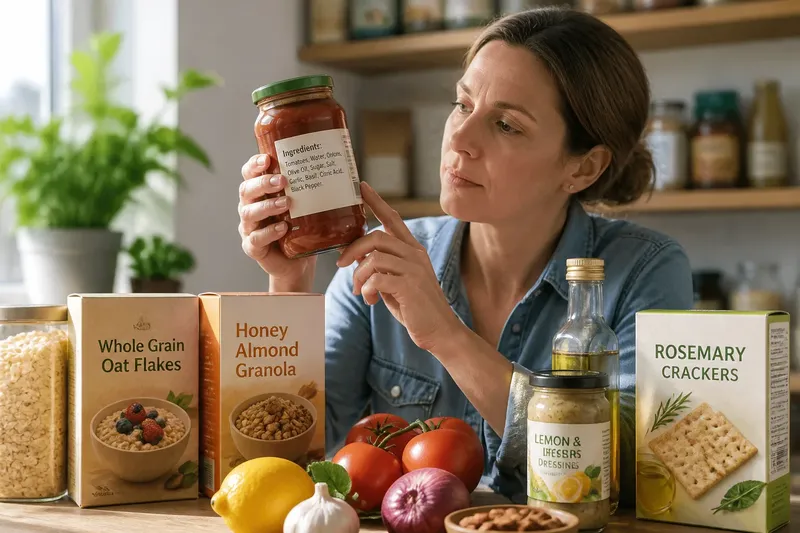
You turn a jar of pasta sauce around, scan the ingredient list, and see tomatoes first, followed by water, onions, and oil. Ingredient order gives you a useful clue: listed ingredients generally appear from the greatest amount to the least by weight. It does not, by itself, tell you how much of each ingredient is present or what the finished food is like.
That distinction matters when a label seems to contradict the name on the front, when a long list looks alarming, or when a favored ingredient appears near the end. The list is a ranking, not a recipe. Reading it well means noticing both what its order indicates and what that order leaves unanswered.
Ingredient order is a ranking by weight
For most packaged foods, ingredients are listed in descending order by weight as they are used to make the product. The first item contributes more weight than the ingredient after it, and the last listed ingredient contributes less than the ones above it. This offers a rough sense of the recipe’s composition without giving exact quantities.
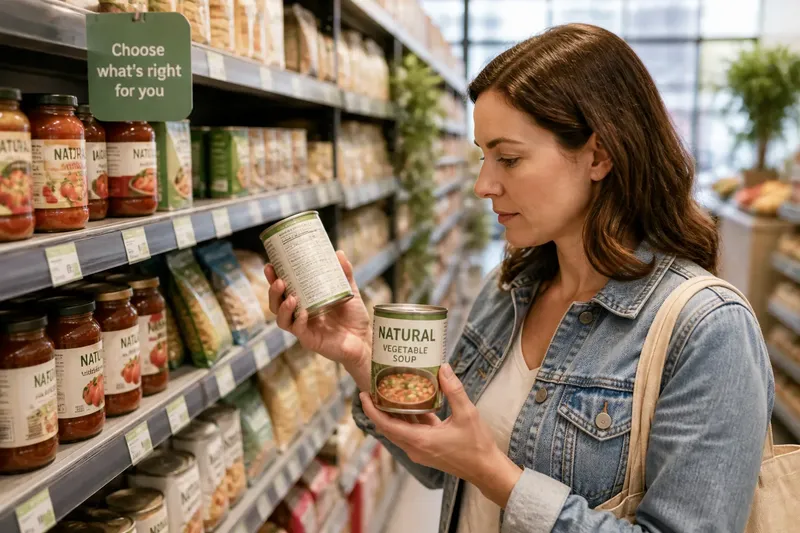
Weight is not the same as visual prominence, flavor strength, or nutritional importance. A small amount of chili can dominate a mild sauce, while a comparatively heavy ingredient may have a subdued taste. A front-of-package picture can give a tomato or almond a starring role even if another ingredient outweighs it in the recipe. The list is a better place to check composition than the artwork, but it still does not measure what you will notice in a bite.
Compare the first few ingredients when two products appear similar. A cereal beginning with whole-grain oats has a different ingredient ranking from one beginning with a sweetener, even if both feature grains and fruit on the front. That comparison can point you toward a closer look; it does not settle every question about the products.
A featured ingredient can be present without leading the list
A product name or image often highlights an ingredient that gives the food its identity or flavor. That ingredient need not be the heaviest part of the recipe. A lemon-flavored dressing, for example, may contain more oil and water than lemon juice. A product description that says “with almonds” also does not tell you whether almonds are a main component or a small addition.
When the featured ingredient matters to your choice, look for its position and for clues elsewhere on the package. The ingredient list can show whether it appears early or late. The product’s name and other label wording may clarify what role it is meant to play, but neither should be treated as a precise quantity statement unless the package actually provides one.
Say you are choosing between two crackers marketed with rosemary. One lists wheat flour, oil, and rosemary; the other lists wheat flour, oil, and several seasonings before rosemary. The first list suggests rosemary contributes more by weight than it does in the second, but it does not establish which cracker tastes more strongly of rosemary. If that flavor is the deciding factor, the list narrows the question rather than answering it.
Small ingredients can be important despite their position
Salt, spices, extracts, colors, and flavorings may appear near the end because relatively little is used by weight. Their place in the list does not mean they are irrelevant. A small amount can affect taste, appearance, or the reason someone avoids a particular product.
For a dietary restriction or allergy concern, do not use position as a shortcut. Read the full ingredient list and the package’s allergen information, since a relevant ingredient may appear late. If the label is unclear, choose another product or ask a qualified professional for advice appropriate to your situation. People with a diagnosed allergy should follow their clinician’s guidance rather than infer safety from an ingredient’s low position.
Likewise, a short list is not automatically a better list. A simple food can need only a few ingredients, while a product designed for a particular texture or flavor may need more. The number and order of ingredients do not establish whether the food suits your needs.
Ingredient order can change with the form used
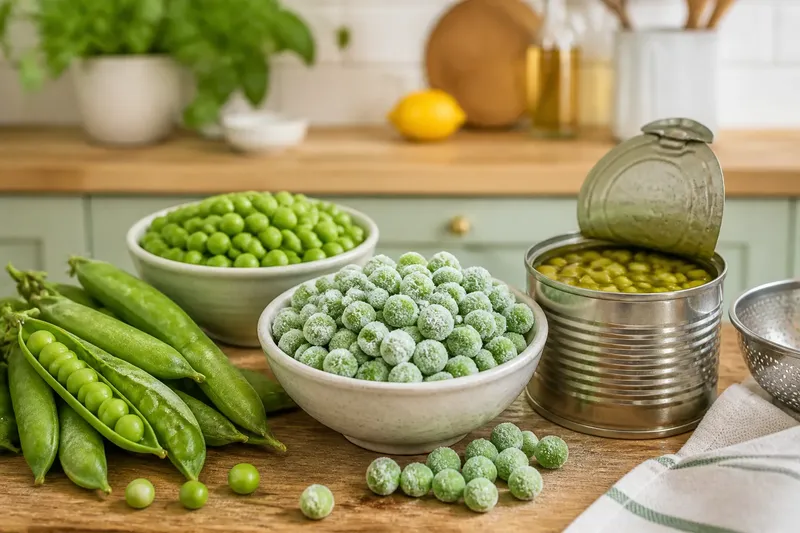
The list ranks ingredients by weight in the form used in the recipe. Water loss or gain during processing can make comparisons less intuitive: fresh fruit, dried fruit, juice, flour, and concentrates do not carry the same amount of water. An ingredient that starts out concentrated may contribute a different weight than a less concentrated version, even when the source food is familiar.
This is one reason not to compare an ingredient’s position across very different products as if the lists were direct recipe measurements. Dried fruit and fresh fruit, for instance, are not interchangeable units of weight. A dried fruit may appear lower in a recipe than fresh fruit would, without that position telling you how much fruit a serving contains or how the two foods compare nutritionally.
Ingredients can also be named in several forms. A label may list a grain as flour, oil as an oil, or a fruit as juice or concentrate. Read the actual terms rather than mentally combining them into one imagined ingredient. Different forms can have different functions and weights in the food.
Ingredient order is not a nutrition panel
The list does not provide a complete account of calories, sodium, added sugars, fiber, or other nutrients in a serving. A product with sugar near the end may still contribute sugar from other ingredients, while a product with an early grain ingredient may vary in fiber. For nutrient questions, use the Nutrition Facts panel and serving information alongside the list.
Nor does order reveal how a product was made in enough detail to judge its overall processing, freshness, or quality. It tells you about ingredient ranking, not the full manufacturing process or the conditions in which ingredients were sourced. Keep the list in its lane; it is already doing useful work there.
What can ingredient order answer?
Does the first ingredient make up most of the food?
It is the ingredient with the greatest weight among those listed, but the list does not say that it makes up more than half the product. It may simply outweigh each other ingredient individually.
Can I tell the exact amount of an ingredient?
Not from its position alone. A label may provide a quantity separately, but the ranking itself gives only a relative order.
Does an ingredient near the end matter less?
It weighs less than the ingredients above it, but it can still matter for flavor, appearance, or an individual dietary need. Position is not a measure of personal significance.
Can I use the list to compare two similar products?
Yes, especially to see which ingredients appear near the top and whether one product includes ingredients the other does not. Treat the comparison as a starting point, then check serving information and the Nutrition Facts panel for questions about nutrients.
Read the ranking, then check the question you actually have
Start at the top of the list and note the first few ingredients. If you care about a featured ingredient, find its position; if you care about an allergen, scan the entire list and the allergen statement; if you care about a nutrient, consult the nutrition panel. Each label section answers a different question.
When two products are close, compare lists with similar foods rather than treating a sauce and a dry mix as if they were the same kind of recipe. A useful comparison might be two tomato sauces, noting their first ingredients and then checking sodium or added sugars on the nutrition panel. The ingredient order shows which components lead by weight, while the panel addresses the nutrient concern.
Ingredient order is most helpful when read narrowly: it shows which ingredients contribute more weight than others, not a complete recipe or verdict on the food. Keep that distinction in mind the next time a package gives one ingredient the largest photograph and another ingredient the first line.